Dairy collectibles include milk bottles, bottle caps, milk cans, wooden crates, signs, trays, ice cream containers, clocks and calendars. Milk bottles had the company names embossed or painted on them. The manufacturer’s name was also carved into the early wooden milk crates that carried the product in it.
Dairy signs were made out of cardboard or tin and often featured children or families. By the early 1900’s, advertising messages included how drinking milk was healthy for everyone, such as “Milk Belongs in Every Meal”, “Milk Builds Great Athletes” and “No One Ever Outgrows the Need for Milk”.
1880 Horse Drawn Dairy Delivery
Some of the earliest dairy collectibles are from the small dairies in the late 1800’s that were local. Originally, milk was scooped directly from the farmer’s churn into jugs that customers would leave on their doorsteps. The milk was delivered by horse-drawn carriages. By the early 1900’s, small town dairies were virtually everywhere and the farmers competed against each other as they packaged and sold their milk in bottles that had their names on them. In the larger cities, dairies competed against both large dairies and the smaller mom-and-pop ones.
Milk Bottles In High Demand
Milk Bottles Created in 1884 by a New York Pharmacist
Inventions such as milk bottles, milking machines, pasteurization equipment and refrigerated tanks helped make milk healthier and easier to get to people in all cities. It’s not known for certain when the first milk bottle was introduced. Crockery type jars were originally used in the late 1870’s. One of the first glass milk bottles was developed in 1884 by a New York pharmacist, Dr. Thatcher. Thatcher’s “Common Sense Milk Bottle” had caps that were sealed with a waxed paper disk and protected the milk from germs. Thatcher realized that the contaminated milk had been causing many juvenile deaths after watching milkmen ride up to homes and dip milk from dirty cans and pour it into customer’s jugs. Thatcher’s milk bottles were embossed with an image of a farmer milking a cow and stated “Absolutely Pure Bottled Milk”. Originals of these are very hard to find and considered valuable.
1940′s Milk Bottles Waterloo Milk Company
Milk bottles are the biggest overall single category of dairy collectibles. Many antique advertising collectors are interested in the early milk bottles that were used for home deliveries and have embossments or “pyroglazed” paintings with the names of the dairies on them. The dairies wanted their company names on the bottles so they would get returned to them and reused. Milk bottles were mostly round through the 1950’s, then square shape became more popular. Otherwise, bottles tend to look very similar with clear glass and either a short or medium length neck. They also had a rounded collar but not a wide mouth to make pouring easy. The value of the bottles depend on the condition, the size, the dairy, the image and message, and the paint color.
As manufacturers improved making milk bottles they found it was less expensive to change from embossed labels to applied colored labels know as ACL’s. Bottles with ACL’s and ones that used embossed slug plates are often considered valuable. By the 1960’s, glass milk bottles were replaced with paper cartons and plastic milk containers that were less expensive to make but preserved the milk’s freshness.
Today, when collectors want to show their antique milk bottles they are often filled up with white sand or small white styrofoam pellets to make them look like they have milk.
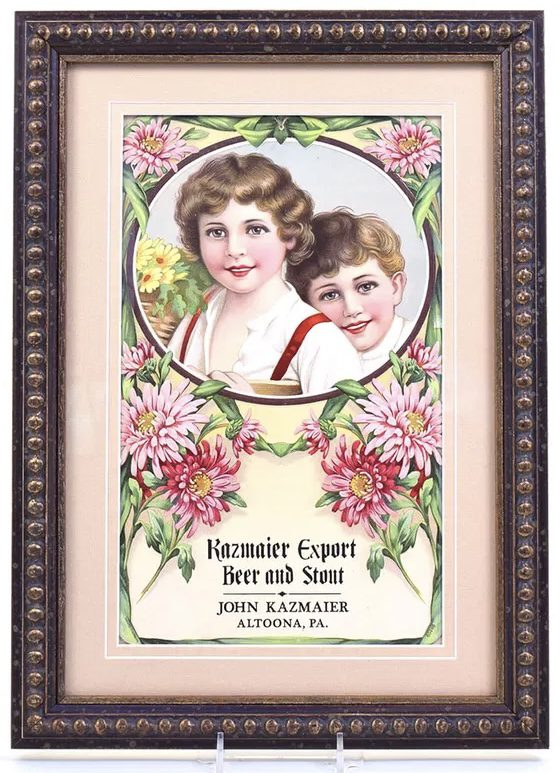
Featured is a nice cardboard like advertising sign from the pre-prohibition era. This item advertises the John Kazmaier Stout and Export styles of beer styles. Lithographs like this were often embossed and make of either a paper lithograph material or a heavier cardboard like stock material. Children and animals were a common theme on advertising…
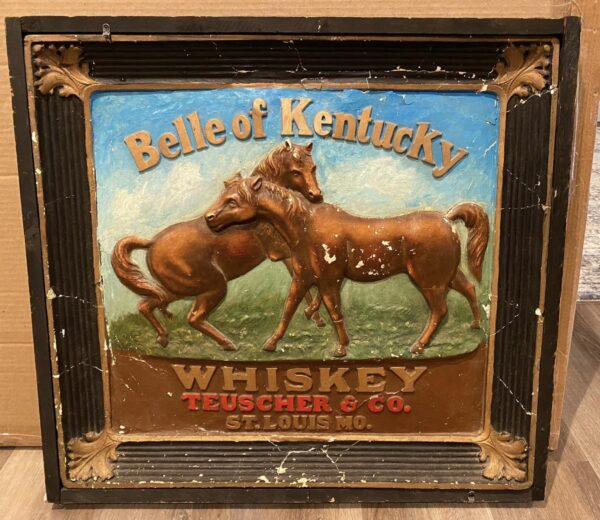
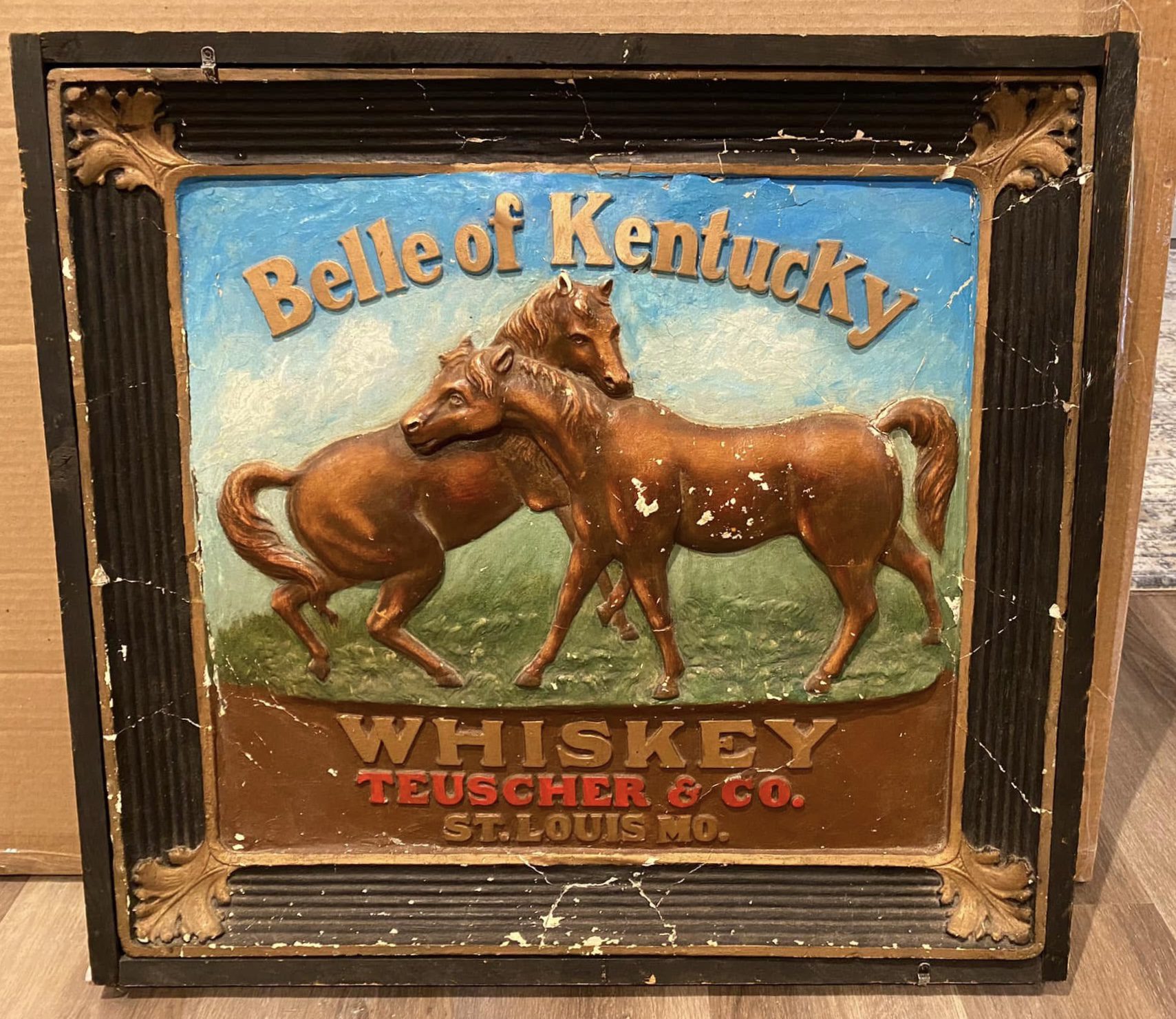
Here is a very neat and unusual plaster paris type of advertising sign from the Teuscher and Company Distillers in Saint Louis, Missouri. This larger plaster piece was made around 1900 and features some beautiful coloring and the unusual content of plaster, not cardboard or tin as most signs of this era were made of.…
The W. Irby Cigar and Tobacco Company put out this beautiful lithograph which appears to show three young ladies dressed up in what appears to be sailor suits or some kind of sailor looking dresses in the 1900 era. Why these outfits is unknown to this author, but the coloring and the image certainly caught…
Here is a tough to find North Yakima Brewing Company serving tray from the small town Washington state brewery. This beer tray essentially touts their superior taste with their slogan. “All beer is good, but Yakima is better”. N. Yakima is an area in the greater Yakima, WA area.
Here is a tough Fox Lake, Wisconsin Brewing Company metal serving tray from the small community in WI. This tray was made by the 20th Century Studio in Coshocton, OH. This company was a jobber for the larger printing companies in Coshocton at that time, probably started by a few artisans who tried to run…
Wow! Here is a stunning serving tray from the Schutz Brewing Co for their Lager Beer put out in the pre-prohibition era around 1910 or so. This brewery was located in Jordan, Minnesota. If you have any Schutz beer items, I would be interested in talking with you!
Here is a beautiful White House Gasoline porcelain sign from the Bell Oil Company which was based in Saint Louis, Missouri years ago. This item was for their White House Gasoline brand of Gas. The Bell Oil Company went out of business in the 1940s or 1950s.
Here is a beautifully colored 1907 souvenir lithograph from the Theo R. Helb Keystone Brewing Company which was formerly in York, PA. This souvenir giveaway is similar to many breweries which handed out yearly calendars in the 1900 era. However, most of these pieces are very hard to find, and many are simply lost to…
Here is a very nice reverse on glass (ROG) style advertising sign from the Nathan M. Uri distilling company which was in Nelson County, featuring a home address in Louisville, Kentucky. This sign advertises their International Whiskies, which apparently was a brand of theirs at one time prior to the start of prohibition in 1919.…
This metal or tin serving tray from the Northampton, Pennsylvania Brewery advertised their Pilsener brand of beer. This tray is very colorful, has the ability to attract a potential customers eyes to their product visually with the great beer bottle graphics and color, and of course, advertised a local product in and around the Northampton…